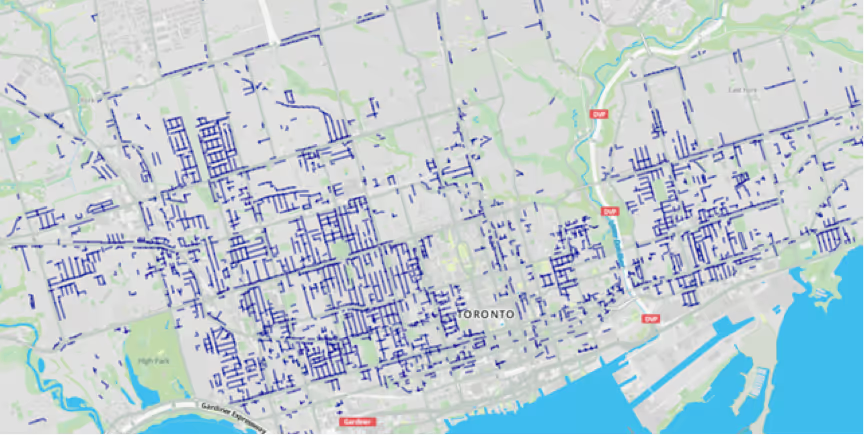
Toronto's laneways can be a significant contributor to the rubbish found in The Great Lakes
When discussing plastic pollution entering the Great Lakes, attention is often focused on municipalities and large industrial or commercial sites. However, residential neighbourhoods and urban laneways can also contribute significant amounts of litter that is washed into the stormwater network.
To better understand this overlooked source of pollution, EnviroPod™ installed a LittaTrap™ within a stormwater catch basin in a Toronto laneway to monitor the quantity and type of litter entering the stormwater system.
The results demonstrated that even a single laneway can generate substantial amounts of plastic and other gross pollutants destined for local waterways.

Urban laneways experience constant activity from residents, businesses, visitors, waste collection, and deliveries.
Litter left on these surfaces can be carried by rainfall into nearby storm drains where it flows untreated through the stormwater network and ultimately into rivers and the Great Lakes.
The objective of the trial was to:
EnviroPod™ installed a single LittaTrap™ in a catch basin located within a laneway on Logan Avenue, Toronto.
The location was selected because it served a diverse range of users. Situated adjacent to District 28, a shared office and community space featuring offices, a bistro, and entertainment facilities, the site represented a typical mixed-use urban environment rather than a single land use.
The LittaTrap™ was monitored over a two-month period, from January to March, before being removed for analysis.
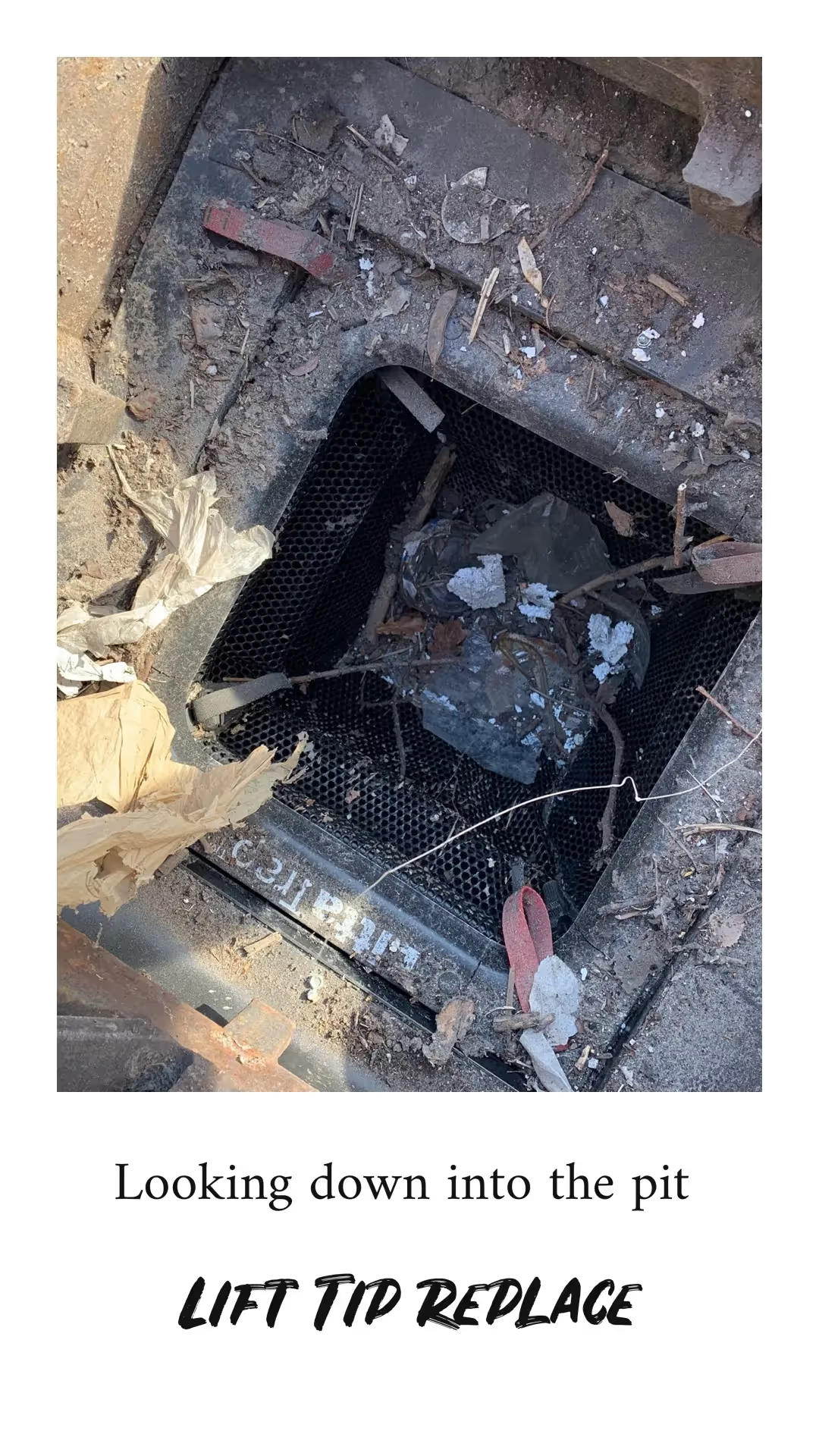
At the conclusion of the monitoring period, the LittaTrap™ was manually emptied and the captured material sorted and recorded.
The captured material included:
The most common pollutant by far was polystyrene, highlighting how lightweight plastics are easily transported into stormwater systems.

Although the monitoring programme focused on just one catch basin, the findings demonstrated that laneways are a significant source of urban litter entering the stormwater network.
The trial highlighted two important observations:
When multiplied across the extensive network of laneways throughout Toronto, the cumulative impact becomes considerable.
Capturing litter before it enters underground drainage provides municipalities with an opportunity to significantly reduce pollution reaching downstream waterways.
The LittaTrap™ was selected because it offers a practical, retrofit solution for capturing litter directly within existing catch basins.
Key benefits include:
The monitoring programme also demonstrated how LittaTrap™ can be used as a valuable tool for understanding litter hotspots and informing future stormwater management strategies.

Plastic pollution entering urban stormwater systems is cumulative.
While a single laneway may appear insignificant, hundreds or thousands of similar catchments across a city can collectively contribute substantial quantities of litter to the environment.
By intercepting litter before it reaches the drainage network, municipalities can:
The Toronto Laneway Monitoring Project demonstrates that residential and mixed-use laneways are an often-overlooked source of stormwater pollution.
Over just two months, a single LittaTrap™ prevented 217 pieces of litter from entering the stormwater system, with polystyrene accounting for nearly three-quarters of all material captured.
The project reinforces the importance of at-source stormwater treatment and shows how simple retrofit technologies like LittaTrap™ can help municipalities better understand and reduce plastic pollution before it reaches the Great Lakes.