

"In under one year, we’re approaching one tonne of material removed from our storm system." Kyle Rodger, Senior Stormwater Technician for the Town of Bradford
In May 2024, the Town of Bradford implemented a targeted pilot program to assess the effectiveness of catch basin inserts in intercepting pollutants at source within the stormwater network. A total of 32 LittaTrap™ units (EnviroPod™) were installed at identified hotspot locations, with a focus on capturing trash and litter entering downstream infrastructure, including stormwater management ponds.
The program was monitored over an 11-month period, with maintenance and data collection carried out during two cleanout events in September 2024 (fall) and April 2025 (spring). At each cleanout, captured material was removed, weighed, and sorted into sediment (sand/silt), organic material, and plastics/litter to better understand pollutant composition and loading.
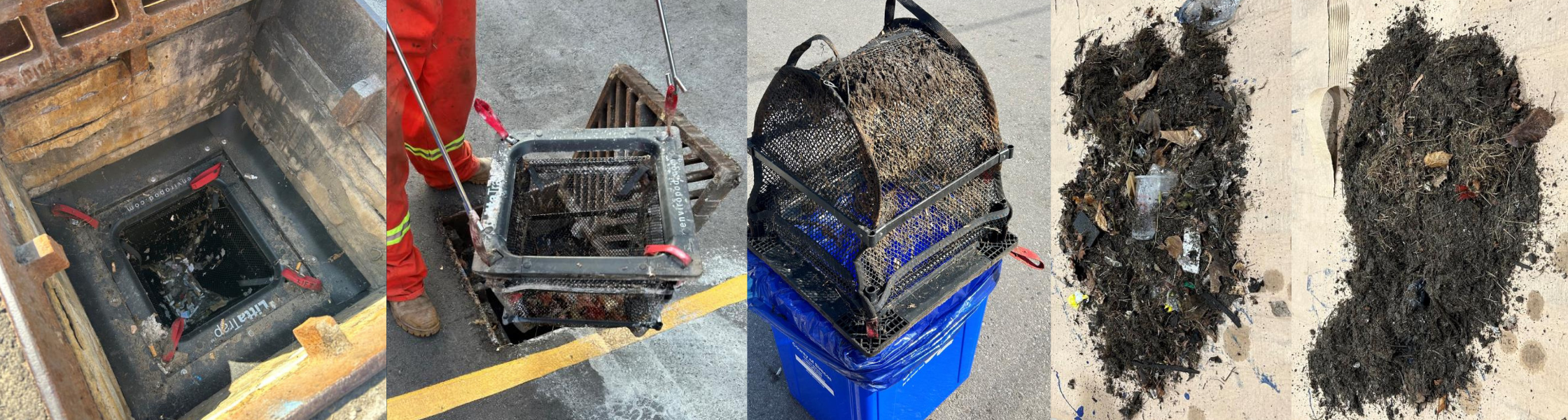
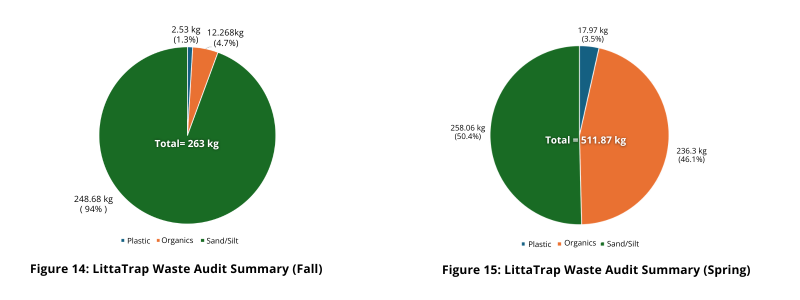
The first maintenance event, conducted approximately five months after installation, recorded a total of 263.47 kg of captured material across the network. This equated to an average of 8.23 kg per unit, with a maximum of 50.57 kg captured in a single catch basin. The town was pleasantly surprised with the amount of sediment captured which reduces maintenance on their stormwater ponds. Because of the urban drainage context, the material was predominantly sediment (248.68 kg), with smaller contributions from organic matter (12.27 kg) and plastics/litter (2.53 kg).
The second cleanout, undertaken seven months later in spring, showed a notable increase in total captured material, with 511.87 kg removed across the 32 units. The average capture per unit increased to 15.99 kg, with a similar maximum per unit (51.38 kg), indicating consistent performance at higher-loading locations. While sediment remained a significant component (258.06 kg), there was a substantial increase in organic material (236.30 kg) and plastics/litter (17.97 kg) compared to the fall results.
.png)
Across the full monitoring period, the LittaTrap™ units captured a total of 775.34 kg of material, or approximately 24.23 kg per unit on an annualised basis. The increase observed in the second maintenance cycle reflects typical seasonal influences, particularly the mobilisation of organic debris and associated pollutants during wetter periods and following leaf fall.
The data also highlights variability between individual catchments, with some units capturing significantly higher loads than others. This reinforces the importance of targeted placement in high-contributing areas to maximise performance and maintenance efficiency.
From an operational perspective, the pilot demonstrates how catch basin inserts can function as an effective pre-treatment measure within the stormwater treatment train, intercepting material before it reaches downstream assets. By capturing sediment and debris at source, municipalities can reduce loading on stormwater ponds and other treatment systems, with potential implications for maintenance frequency and long-term asset performance.
Following the pilot, the Town of Bradford expanded the program with an additional 90 units, indicating confidence in the approach as part of its broader stormwater management strategy. Further work is planned to better understand the characteristics of captured sediment, including the potential influence of winter operations such as road salt application.
Reflecting on the program, Kyle Rodger, Senior Stormwater Technician for the Town of Bradford, noted the scale of material being intercepted:
“In under one year, we’re approaching one tonne of material removed from our storm system. The units are performing consistently and capturing material where it enters the network.”
Overall, the Town of Bradford pilot provides field-based evidence supporting the use of at-source treatment measures within municipal stormwater networks. The results demonstrate consistent pollutant capture across varying conditions and highlight the role of distributed interception in supporting system performance and maintenance planning.
