

The LittaTraps have proven to be easy to maintain and effective in trapping both man-made and organic debris helping to protect our sensitive estuarine system.
PROJECT OVERVIEW:
The Safeguarding Our Bays initiative was developed to better understand and reduce stormwater-derived pollution entering sensitive estuarine environments.
Led by the St. Andrew & St. Joseph Bays Estuary Program and supported by a 2024 award from the National Oceanic and Atmospheric Administration Marine Debris Program (NOAA), the project combines research, monitoring, and practical intervention to prevent litter and debris from reaching coastal waterways.
With the grant funding, the programme installed 32 LittaTrap™ units across the cities of Parker, Lynn Haven, Panama City, and Panama City Beach. These systems are designed to capture trash at the source, protecting critical habitats such as seagrass beds and wetlands that support local ecosystems and economies.
The initiative also incorporates community engagement, including education campaigns, storm drain marking, and clean-up events, creating a holistic approach to pollution prevention.

THE CHALLENGE:
Stormwater runoff is a major pathway for marine debris and plastic pollution, rapidly transporting contaminants from urban environments into bays and estuaries.
Traditional downstream treatment methods provided limited control and visibility, highlighting the need for at-source solutions that could both intercept pollutants and support data collection.
“The LittaTraps have proven to be easy to maintain and effective in trapping both man-made and organic debris helping to protect our sensitive estuarine system.”
Jessica Graham, Ph.D
Executive Director - St. Andrew and St. Joseph Bays Estuary Program
.png)
SOLUTION:
The programme deployed LittaTrap™ catch basin inserts at targeted hotspot locations to:
LittaTrap™ is a retrofit, in-drain solution designed to capture gross pollutants (>5mm), including plastics and organic debris, while maintaining hydraulic performance.
.png)
RESULTS & IMPACT:
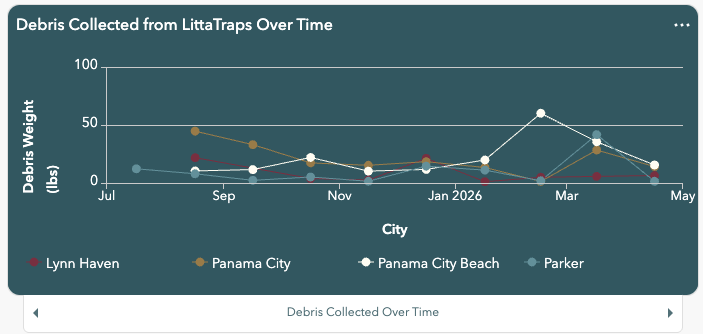
By combining physical capture with monitoring, the programme is delivering measurable outcomes:
WHY LITTATRAP™:
CONCLUSION:
The Safeguarding Our Bays initiative demonstrates the power of combining science, community engagement, and practical stormwater solutions.
By implementing at-source technologies like LittaTrap™, the programme is not only reducing pollution but also building a clearer understanding of how stormwater impacts coastal ecosystems—helping shape more effective, long-term water quality strategies.

